“… Life, in fact, is a priceless gift that develops within a committed relationship based on mutual self-giving and service. In light of this profound vision of life as a gift to be cherished, and of the family as its responsible guardian, we categorically reject any practice that denies or exploits the origin of life and its development …”
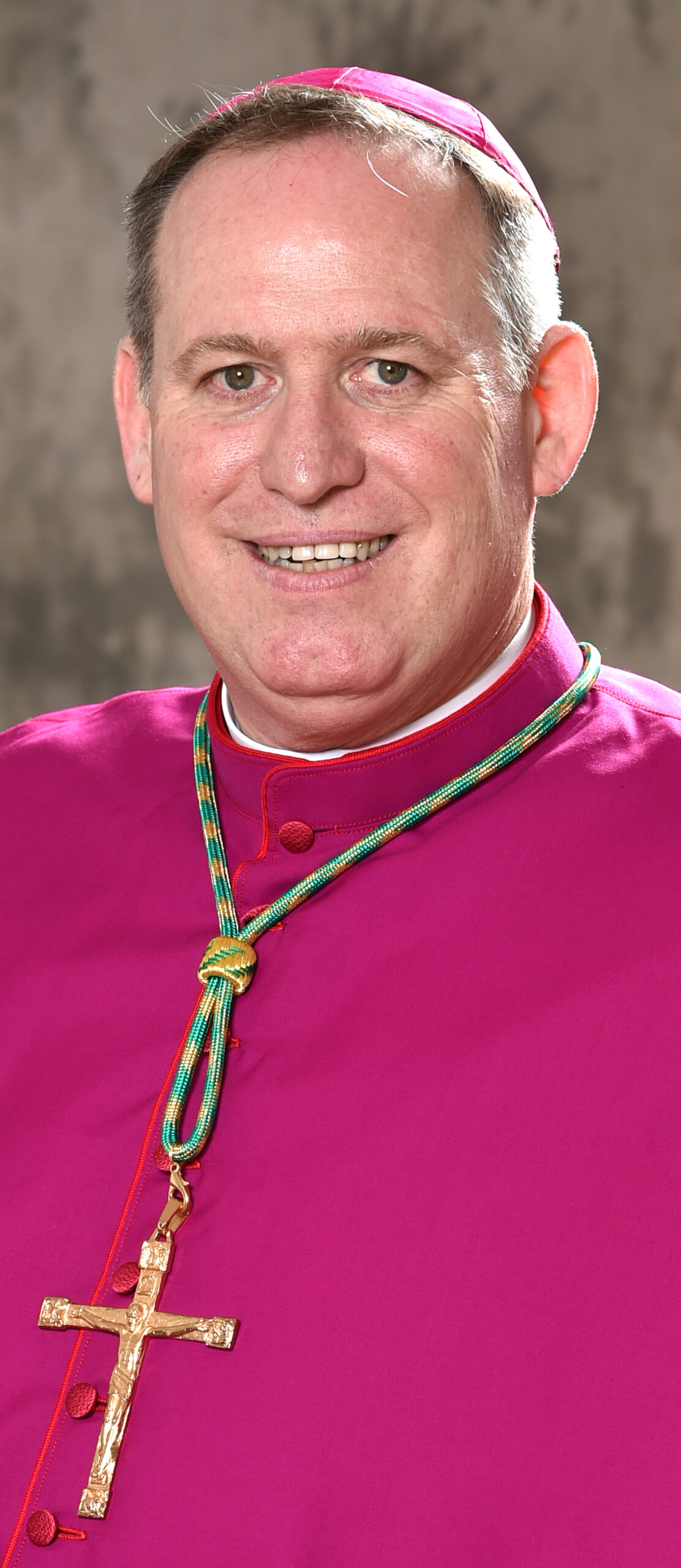
As I traveled to Washington, D.C. for the 53rd annual National March for Life, I was thinking, praying, and reflecting on the “Pro-Life Movement” in our country and in our Church at this time, in January of 2026. While I believe and am concerned that our efforts to build a “Culture of Life” may have lost some of the energy and enthusiasm that they seem to have had 10 or 20 years ago, I was also looking forward to attending the March for Life, which always has been able to lift my spirits, in different ways, especially by the ever-growing presence at the March of young people of high school and college age, who are often called the “Pro-Life Generation.”
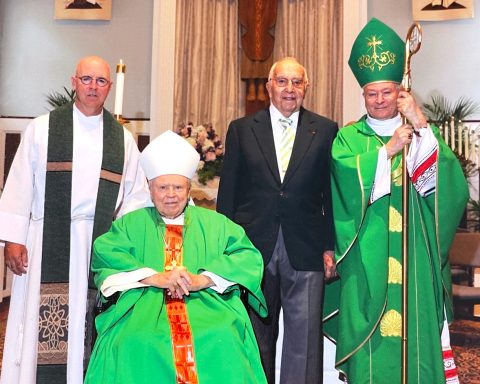
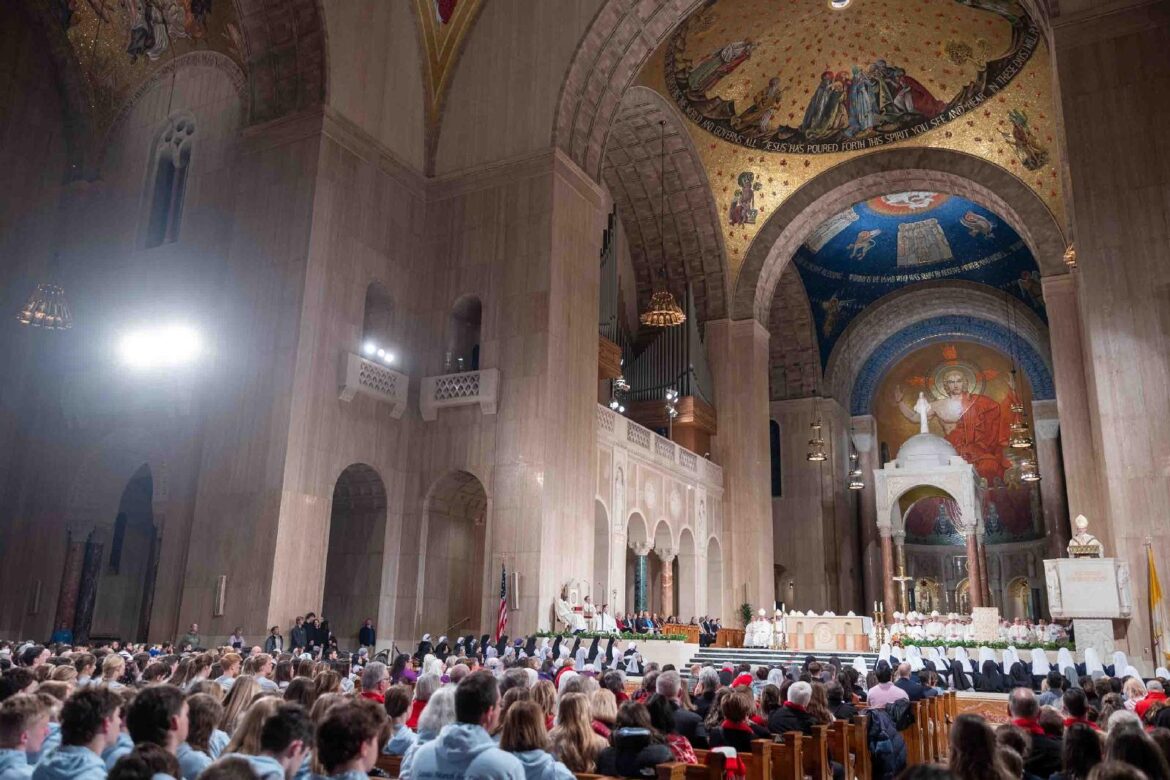
Almost since the beginning, since the first March for Life (on Jan. 22, 1974), there has also been a “National Prayer Vigil for Life” on the night before the March, held at the Basilica of the National Shrine of the Immaculate Conception. The “Vigil for Life” begins with a concelebrated Mass at the basilica at 5 p.m. For the last few years, I have been able to travel to Washington on the day before the March and concelebrate the Vigil Mass. This year, the main celebrant and homilist for the Vigil Mass was Bishop James Conley, bishop of the Diocese of Lincoln, Nebraska. Bishop Conley’s homily, along with the basilica being “standing room only” and filled with young people, was “just what I needed to hear (and see)” to lift my spirits.
I encourage you to take the time to either read or listen to (and watch) Bishop Conley’s homily.
Here is a link to the Text of the homily.
In the homily, Bishop Conley quoted a recent address by Pope Leo XIV, the same address, to the Diplomatic Corps, quoted above. Bishop Conley said:
“…our brothers and sisters in the womb are the most vulnerable and most voiceless of victims. In most other cases of injustice, those who are threatened can speak out for themselves and have at least some power to defend themselves, some form of advocacy. Our Holy Father, Pope Leo XIV, has recently spoken out along these same lines in his speech to the diplomats accredited to the Holy See on Jan. 9 in his State of the World address. In his speech, he confirms the importance of abortion as the preeminent priority when he says, “We firmly reiterate that the protection of the right to life constitutes the indispensable foundation of every human right.”
On the morning of the March for Life (Friday, Jan. 23), I was privileged to celebrate two Masses. One was at 8 a.m. for members of the Order of Malta, and the second, at noon, was for our diocesan “contingent,” two buses from St. Paul’s Inside the Walls and a bus from Our Lady of the Holy Rosary parish in Passaic. In between the two Masses, I was “catching up on some news” and was able to read a statement that had been issued the previous Monday (Jan. 19) by Cardinal Blase J. Cupich, archbishop of Chicago, Cardinal Robert McElroy, archbishop of Washington, and Cardinal Joseph W. Tobin, C.Ss.R., archbishop of Newark.
I strongly encourage readers to click on the link below so that you can read the statement and also hear from each of the cardinals how listening to Pope Leo’s address to the Diplomatic Corps led them to issue the statement. Cardinal Cupich said: “… Pope Leo has given us clear direction and we must apply his teachings to the conduct of our nation and its leaders.”
Cardinal Tobin said: “Recent events, including participation in last week’s consistory in Rome with Pope Leo and brother cardinals from across the world, convince me of the need to underscore the vision of Pope Leo for just and peaceful relations among nations…”
Three Catholic Cardinals Issue Rare Joint Statement on the Morality of U.S. Foreign Policy
I hope that readers will take the time, not only to read the brief (six paragraph) statement from the three cardinals, speaking “as pastors and citizens,” but that each of us will consider the ways in which we are being called to proclaim the Gospel of Life and, as Bishop Conley recalled the words of St. Pope John Paul II, “build a Culture of Life and Civilization of Love.” These are challenging days and times for our country, our Church, and our world. I write these words on the Fourth Sunday of Ordinary Time. I hope and pray that the words of today’s Gospel, from the Beatitudes and the Sermon on the Mount are “taking root” in the good soil of our hearts and lives, as we remember, “Blessed are they who hunger and thirst for righteousness, for they will be satisfied … Blessed are the peacemakers, for they will be called children of God.” (Mt. 5:1-12a)