“… By his labor and abilities man has always striven to improve the quality of his life. Today, particularly by means of science and technology, he has extended his mastery over almost the whole of nature, and still continues to extend it. Through the development of the many means of communication among nations, the human family is coming to see itself, and establish itself, as a single worldwide community. As a result, where formerly man looked especially to supernatural forces for blessings, he now secures many of these benefits for himself, thanks to his own efforts.
In the face of this vast enterprise now engaging the whole human race, men are asking themselves a series of questions. What is the meaning and value of all this activity? How should these benefits be used? Where are the efforts of individuals and communities finally leading us?
The Church is the guardian of the deposit of God’s word, from which are drawn the principles of the religious and moral order. Without always having a ready answer to every question, the Church desires to integrate the light of revelation with the skilled knowledge of mankind, so that it may shine on the path which humanity has lately entered…”
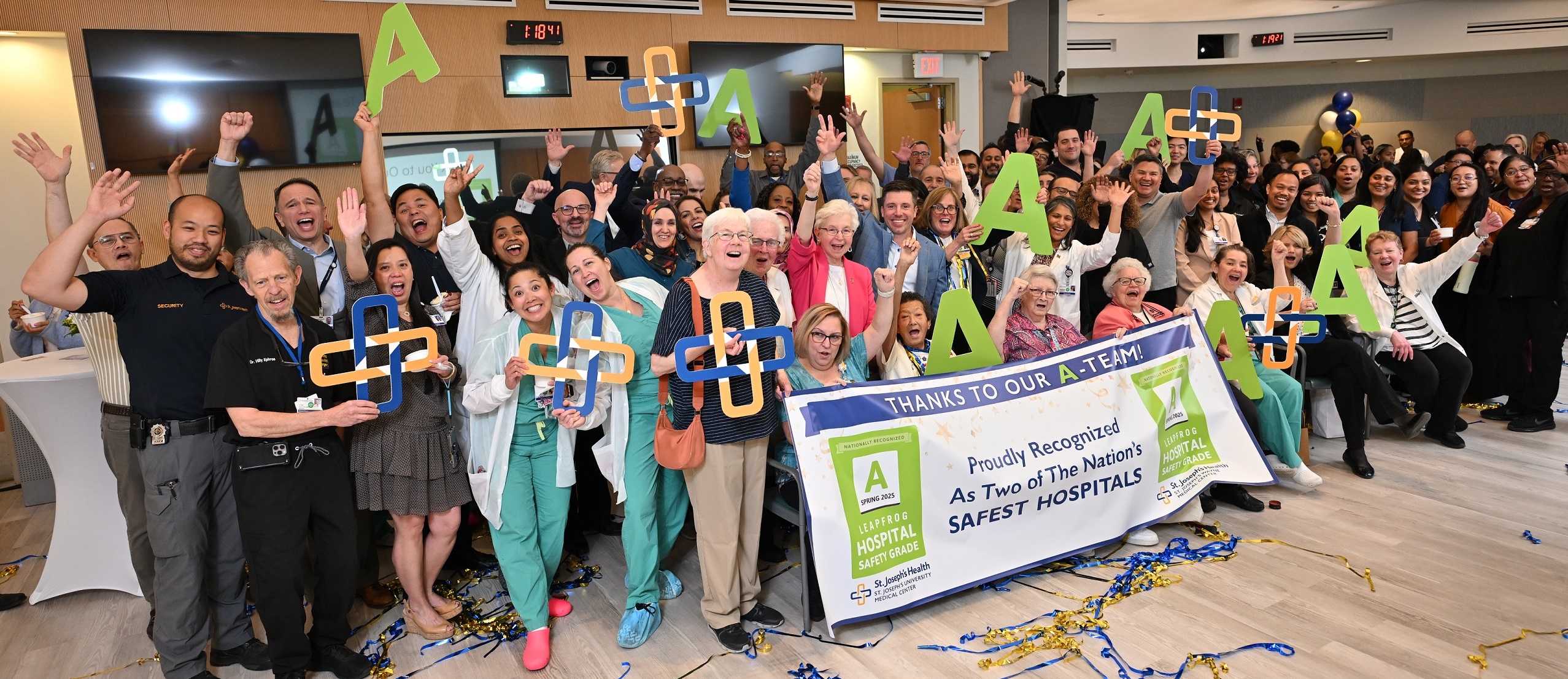
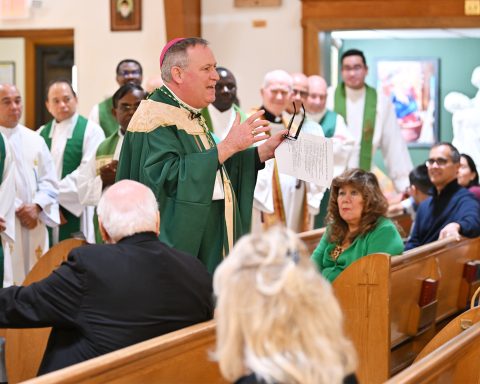
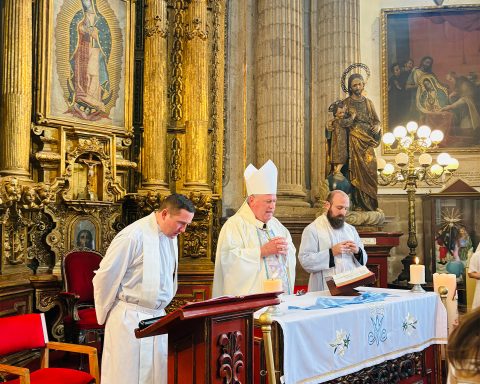
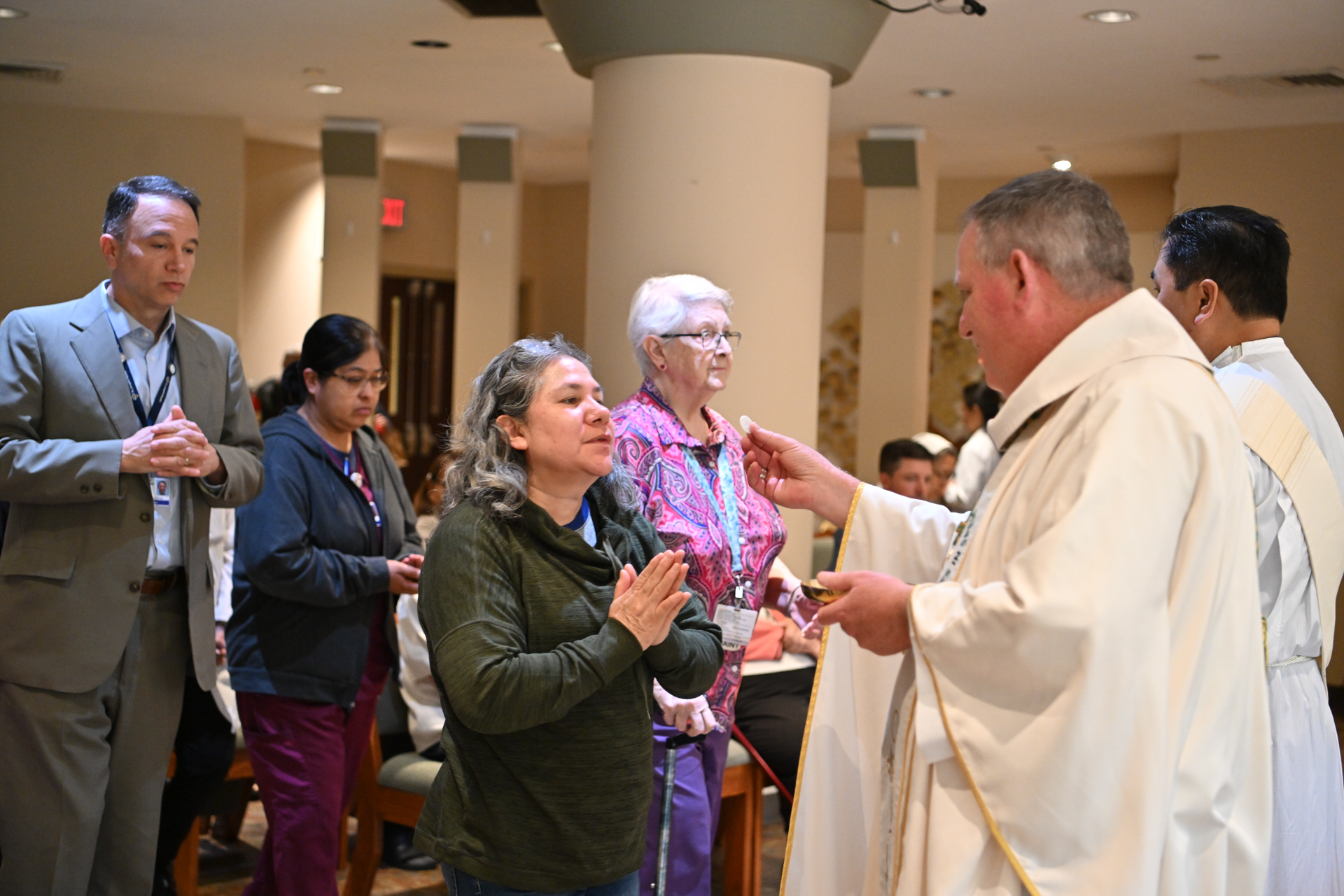
On Thursday, May 1, the Feast of St. Joseph the Worker, I had the privilege of celebrating a Mass for our “Diocesan Jubilee of Workers” at St. Joseph’s University Medical Center in Paterson for what turned out to be a “double celebration.” After the Jubilee Mass, Dustin Riccio, President and CEO of St. Joseph’s Health, shared an announcement with the staff that both Paterson and Wayne hospital campuses received an “A” safety grade from The Leapfrog Group. I was happy to be able to congratulate President Riccio, his team, the Sisters of Charity of Saint Elizabeth, and all the doctors, nurses, and employees at St. Joseph’s Health. They are a great blessing to our diocese and community.
In preparation for the Mass for the “Jubilee of Workers,” I looked at the “Office of Readings” from the Liturgy of the Hours for the Feast Day. I also went to one of my favorite websites, “Franciscan Media’s — Catholic Saint of the Day,” where you can find the “origin story” of the Feast of St. Joseph the Worker, a relatively “young” feast day in the life of the Church, given to us by Pope Pius XII in 1955. For more details, you can go here.
I was especially struck by the selection that the Church gives us for the second Reading in the “Office of Readings” for the Feast Day, which comes from Paragraphs 33-34 of Gaudium et Spes, the Pastoral Constitution on the Church in the Modern World of the Second Vatican Council. Part of that selection is quoted above. Gaudium et Spes was one of the last documents of the Council, promulgated by (St.) Pope Paul VI on December 7, 1965. You can find the full text on the Vatican’s website.
As I read the words of paragraphs 33-34 of Gaudium et Spes in the Office of Readings, I was amazed at how those words written 60 years ago continue to “speak” and in some ways seem to predict the circumstances, challenges, and questions that we face in our world and culture today. “Gaudium” and “Spes” are the Latin words for Joy and Hope. They became the title of the document (Pastoral Constitution) because they are the first words of the opening sentence. Here is the opening paragraph:
- The joys and the hopes, the griefs and the anxieties of the men of this age, especially those who are poor or in any way afflicted, these are the joys and hopes, the griefs and anxieties of the followers of Christ. Indeed, nothing genuinely human fails to raise an echo in their hearts. For theirs is a community composed of men. United in Christ, they are led by the Holy Spirit in their journey to the Kingdom of their Father and they have welcomed the news of salvation which is meant for every man. That is why this community realizes that it is truly linked with mankind and its history by the deepest of bonds.
If it did not happen the first time you read the words of the opening paragraph, I invite you to read them again and ask yourself whether they “sound” like something Pope Francis would say. Then you might read them a third (or fourth) time and imagine hearing Pope Benedict XVI or (St.) Pope John Paul II proclaiming those words?
Since the death of Pope Francis and throughout his Petrine ministry, many have referred to his first Apostolic Exhortation, Evangelii Gaudium (The Joy of the Gospel), as the roadmap or “playbook” for his Pontificate. Many have also commented on the ways in which Evangelii Gaudium and Francis’ Papal ministry and leadership were a “continuation” of the teachings of the Second Vatican Council, especially the teaching and “approach” of Gaudium et Spes. As we reflect on the Church’s “Magisterium” (Teaching Ministry), we can look at the way that it has developed over the past 2,000 years, as Church historians and theologians have done and continue to do. There is also a beautiful “continuity” of that teaching ministry when we reflect on the Papal Ministry. In the past six decades, we can see that continuity (and the variety of gifts) in the “personal characteristics,” ministry and leadership of Pope John XXIII, Paul VI, (John Paul I), John Paul II, Benedict XVI, and Francis.
The conclave will begin tomorrow. As we unite in prayer with the whole Church, invoking the Holy Spirit on behalf of the Cardinal-electors, that our Merciful God will send us the next, “Vicar of Christ” and “Successor of Peter” that we need, let us not forget that we believe we are still “in the time of the Acts of the Apostles.” That is to say, that we believe that the “One, Holy, Catholic, and Apostolic” Church that was “born” on the day of Pentecost, when the Holy Spirit first descended on the Apostles and our Blessed Mother, is the same Church that continues to “speak” and teach and proclaim the Good News of the Gospel today.
If we are open to hearing God’s “voice” in prayer, we will learn that God can often speak to us through the “prophetic voice” of the Church and her Magisterium. I was grateful for the opportunity to hear that voice as I prepared and celebrated Mass for our Diocesan Jubilee of Workers on the Feast of St. Joseph the Worker.