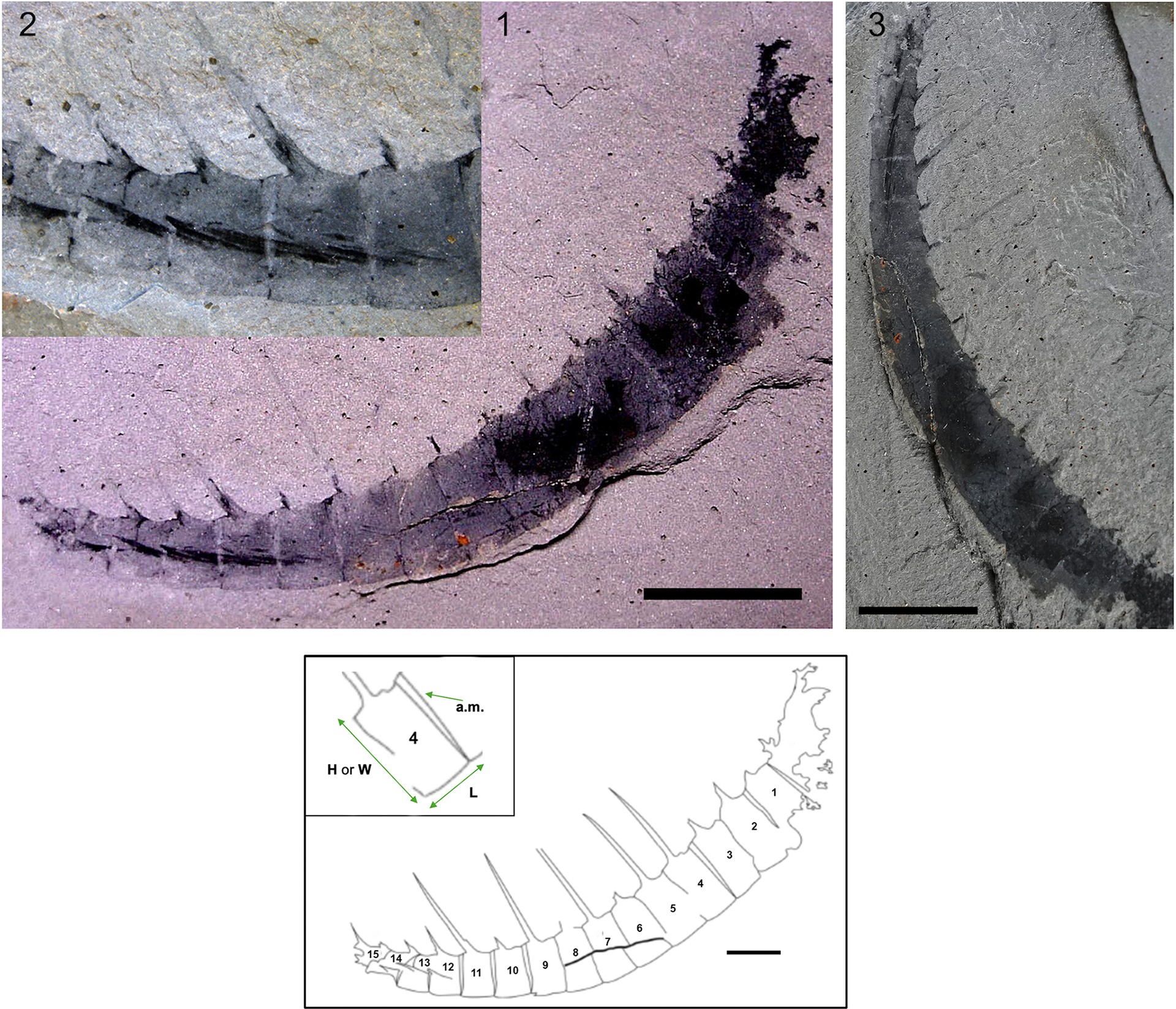
Three years ago, Conner Minkowitz had the thrill of helping confirm the scientific discovery of a new subspecies that was an early relative to modern arthropods — a small but meaningful “twig” on the tree of life of God’s creation.
Last month, the Journal of Paleontology published a paper co-authored by Minkowitz, a paraprofessional at St. Patrick School in Chatham, N.J., about the discovery they confirmed: an extinct sea creature they named Verrocaris kerrymatti. The article is the 24-year-old aspiring paleontologist’s first published research paper.
Minkowitz examined a portion of the 512-million-year-old fossil of Verrocaris kerrymatti, which a local fossil collector discovered near Lancaster, Penn., in 2010. The creature was a radiodont, an ancient arthropod, with a hard exoskeleton and jointed appendages, among other physical characteristics. Modern arthropods include spiders, insects, crabs, and millipedes — 80 percent of animal life.
But unlike some radiodont cousins, Verrocaris kerrymatti had a spine attached to almost all its body segments. Also attached were appendages that are believed to have caught prey by sweeping loose sediment on the seafloor and sucking up loose worms. To the contrary, their close relatives hunted prey with long claws and teeth. Fossils of these creatures represent an early phase of animal evolution.
Click here to subscribe to our weekly newsletter.
“It’s a rewarding achievement to have a peer-reviewed scientific paper published. Life is a beautiful thing. It’s a gift. It’s gratifying to examine fossils of extinct creatures to see how they are connected to other similar species and what they tell us about their lives and the Earth’s past,” said Minkowitz, a paraprofessional in St. Patrick’s transitional kindergarten.
Minkowitz grew up with his family in St. Rose of Lima Parish in East Hanover, N.J. He studied animal sciences at Morris County Vocational School in Denville, N.J., with an interest in mammals such as mammoths, mastodons, and saber-tooth cats. That changed to arthropods while attending Franklin & Marshall College in Lancaster, where he earned a bachelor’s degree in geosciences in 2024. Minkowitz plans to pursue a doctorate in paleontology.
In 2014, Katherine L. Oxman, another Franklin & Marshall student, first examined the specimen, which was named after the local collector who found it, Kerry Matt. Her tests proved inconclusive. Matt found the fossil during the excavation of the basement of his home, located near the Kinzers Formation, a vein of limestone and shale near the college — an area rich in arthropod fossils.
Then, in 2022, Minkowitz re-examined Verrocaris kerrymatti, armed with new data, which confirmed the new species. Roger D.K. Thomas, the John W. Nevin Memorial Emeritus Professor of Geosciences at Franklin & Marshall and Minkowitz’s advisor at the time, co-authored the paper with Minkowitz and Oxman.
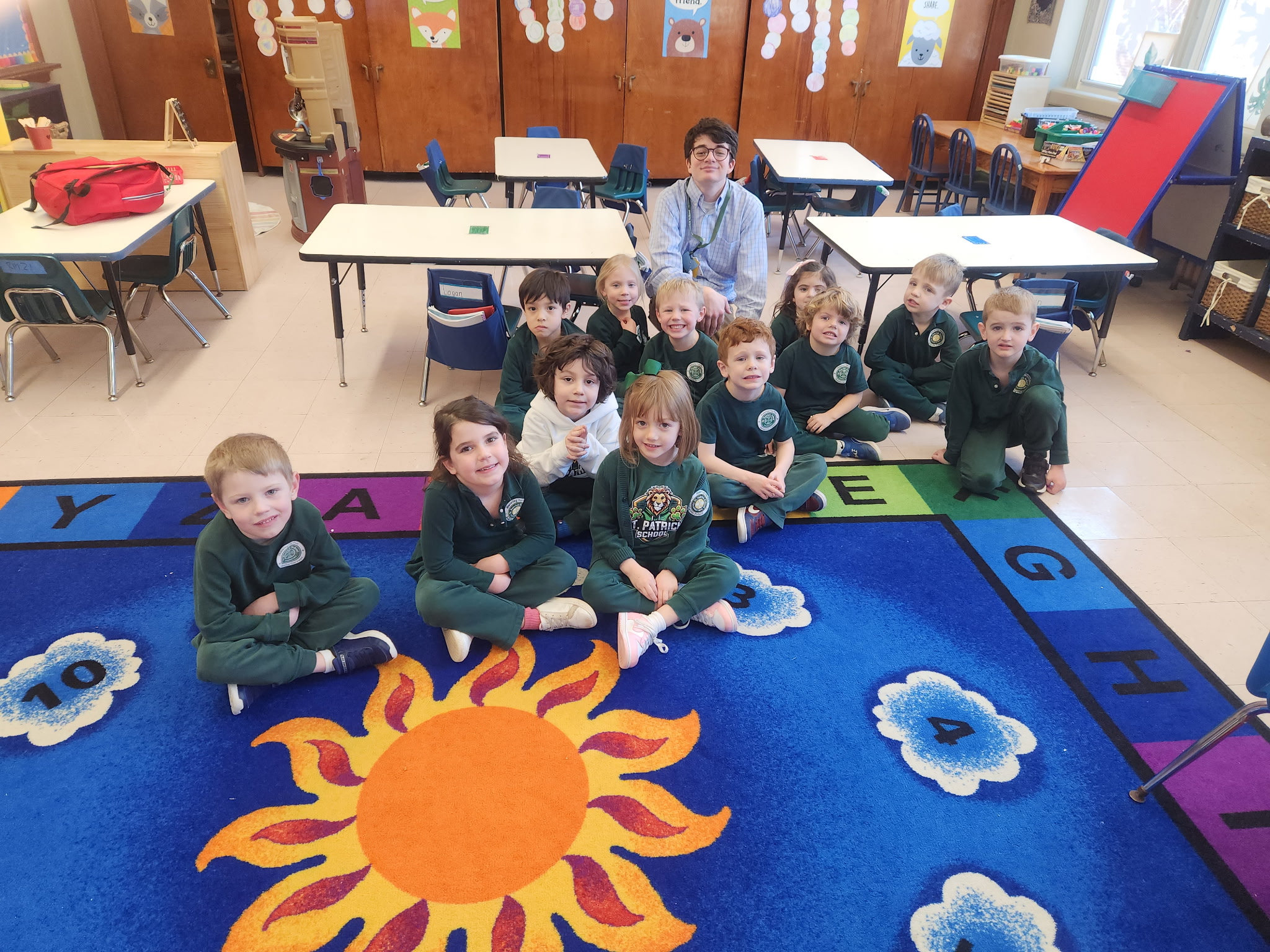
As a paraprofessional, Minkowitz assists the teacher in St. Patrick’s Transitional Kindergarten, which gives some students an extra year of learning and growth before heading to kindergarten. He has also taught students in small groups about subjects such as fossils and dinosaurs.
“It’s rewarding to see the children make significant progress growing to become their own persons,” Minkowitz said.
Dr. Christine Ross, St. Patrick’s principal, called Minkowitz a “gift to the school. Connor models for our students how to be a wonderful person who is ethical and kind.”
Look for coverage of the Paterson Diocese’s celebration of Catholic Schools Week, observed nationally from Sunday, Jan., 25 to Friday, Jan. 30, next week on BeaconNJ.org.
Read the Journal of Paleontology article here.