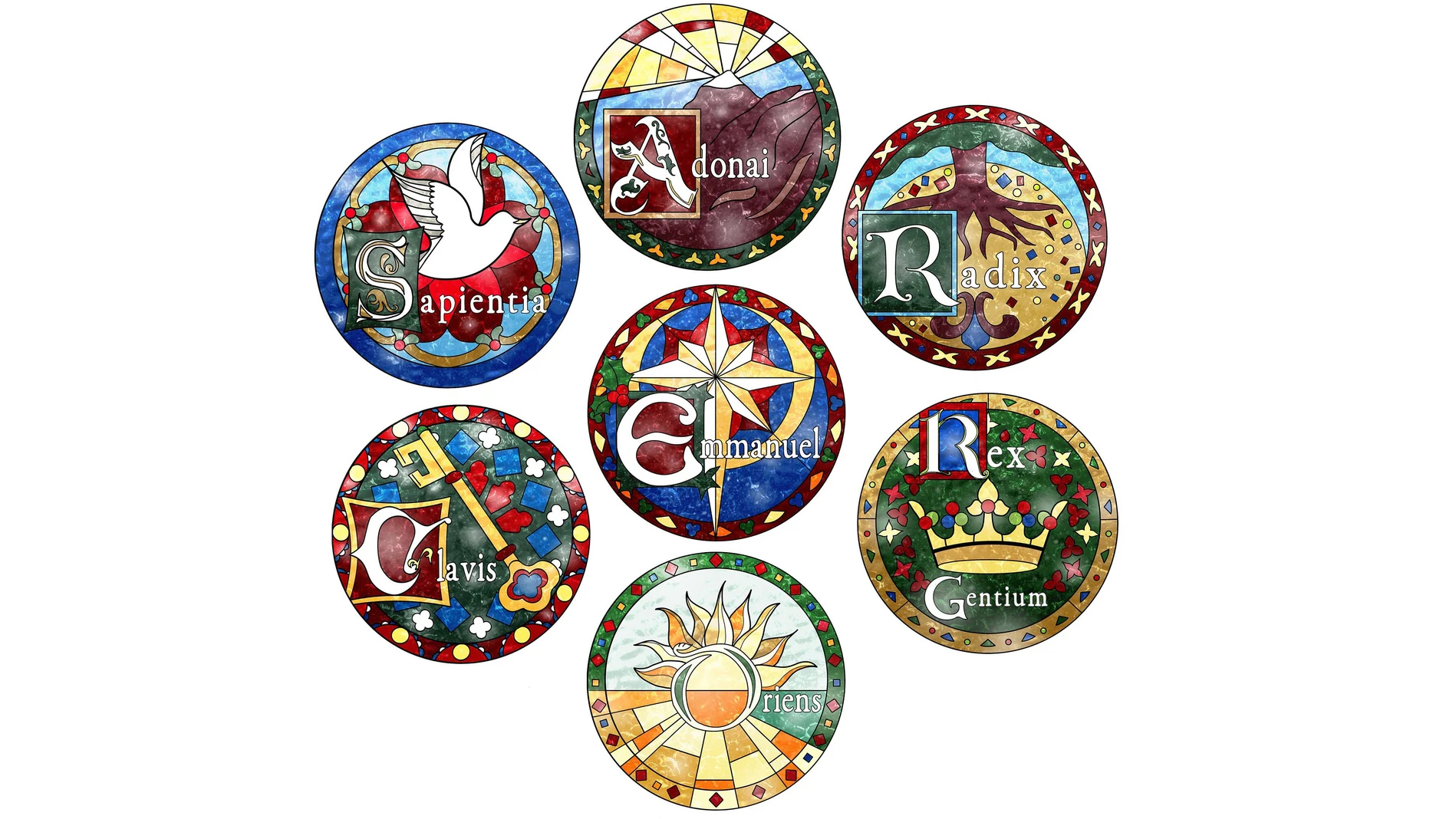
The O Antiphons are seven ancient Christian prayers, used in the final days of Advent (Dec. 17 to 23), that call on Jesus using different Messianic titles from the Old Testament (like Wisdom, Root of Jesse, Key of David) to express the Church’s longing for His arrival, connecting His first coming with His promised return and presence in believers’ lives, famously inspiring the verses of the carol “O Come, O Come, Emmanuel.”
Google: “The O Antiphons explained” — AI Overview
The Liturgy of the Hours and daily Mass are two sources of spiritual strength and nourishment for priests, women, and men “religious” living vows of the consecrated life, as well as for seminarians and those in formation for religious life, for many deacons, and many of the lay faithful. For parents of young children and teenagers, for those working full-time or multiple jobs, finding the time for daily Mass or for praying (even) some of the Liturgy of the Hours (Morning, Evening, Night Prayer, and/or the Office of Readings) can certainly be a challenge or simply not possible.
It may sound counterintuitive, but many spiritual directors would say that the best thing we can do when we are busy or under pressure is to stop or, at least, slow down, and find, make, or take some time to pray. In his homily for the Third Sunday of Advent, Father Mike Schmitz says that he did some research and found studies that have shown that this (Advent) Season is the busiest season of the year. If Advent is the “busiest time of year,” could the last eight days of Advent be the “busiest eight days of the year?”
As the Church gives many of us the Liturgy of the Hours and daily Mass as opportunities for spiritual strength and nourishment every day of the year, is it possible that those two resources could be especially helpful during the busiest days of the year, especially for those who may not be able to avail themselves of those resources on a regular, daily basis?
Each year, for those who pray the Liturgy of the Hours and for those who attend daily Mass, Dec. 17 is a very significant, if at times overlooked, day on the calendar. From the First Sunday of Advent and every day of the Season, the Readings that the Church gives to us at daily Mass and the prayers and Readings of the Liturgy of the Hours are presenting us with Scripture texts and themes that point us to the “promised Messiah,” encourage us to await and prepare for His coming, and with the help of Mary and John the Baptist remind us of what it means to wait and “prepare the way” for the coming of the Messiah. Then, on Dec. 17, the Liturgy of the Word (the Readings) at daily Mass and the Liturgy of the Hours, especially at Evening Prayer, become “laser focused” and give us that opportunity to stop or, at least, slow down and find, make or take the time to pray in anticipation and preparation to celebrate the Birth of Jesus at Christmas.
As with many topics and subjects, there is a great deal of information available online that describes the origins and history of the “O Antiphons.” I began this column with Google’s “AI Overview” because we should “give credit where credit is due,” and the summary is a good one. We can compare and contrast the “AI Overview” with the summary provided on the USCCB Website:
“The Roman Church has been singing the “O” Antiphons since at least the eighth century. They are the antiphons that accompany the Magnificat canticle of Evening Prayer from Dec. 17 to 23. They are a magnificent theology that uses ancient biblical imagery drawn from the messianic hopes of the Old Testament to proclaim the coming Christ as the fulfillment not only of Old Testament hopes, but present ones as well. Their repeated use of the imperative “Come!” embodies the longing of all for the Divine Messiah.”
If you click on the link to the USCCB website, you can also see the text of the “O” Antiphon for each day. Clicking on the link and reading the text of each Antiphon will give you some information. Taking time to pray and meditate on God’s Word and the message of the “O” Antiphons can help you draw closer to God, help you truly prepare to celebrate Christmas, and fill you with the true Peace and Joy that only Jesus can give. Here is an invitation, especially for those who may not be familiar with the Liturgy of the Hours or who may find it difficult to find the time to pray Evening Prayer every day. Can you try it for one, two, or seven days? All you have to do is Google: Liturgy of the Hours Evening Prayer and the date. Here is a link to Evening Prayer for Dec. 17.
Whether or not you are able to attend Mass every day, I would strongly encourage you to try to find the time, in addition to Sunday Mass, on a few (2, 3, or 7) days from Dec. 17 to Dec. 23 to attend Mass during the week. Whether or not you can get to Mass every day, if you have access to the internet, it is (very) easy to find the Readings for Daily Mass. Can you find some time (10 or 15 minutes) to pray with the Word of God by meditating on the Daily Mass Readings in the seven or eight days leading up to Christmas?
There are many places online where you can find the Readings for Daily Mass. I think that the USCCB website is the most reliable source. Here’s a link to the Readings for Dec. 17. When you read those Readings, especially the First Reading from the Book of Genesis, you might ask, “What does this have to do with Christmas”? My response: “Hang in there.” When you read the Gospel for Dec. 17, which is “Matthew’s Genealogy” (Mt. 1:1–17), you read 17 verses of names and the phrase “the father of” 39 times, you might ask, “Why is the bishop (or the Church) asking us to read (& pray with) this?” My response: “Hang in there and spend a little time reflecting on the Beautiful Mystery of Family, including the mystery of the “Holy Family.”
If you can “hang in there” and spend some time each day, from Dec. 17 to Dec. 24 (there is morning Mass on the morning of Christmas Eve), praying with the Daily Mass Readings, you will not only get a “mini course” in God’s plan of Salvation as it is revealed in the Sacred Scriptures, but you will have an opportunity to “journey” with Mary and Joseph, with Elizabeth and Zechariah, and with the Church and that journey will lead us, prayerfully, to the Silent, Holy Night in Bethlehem.
Click here to subscribe to our weekly newsletter.